
Abstract
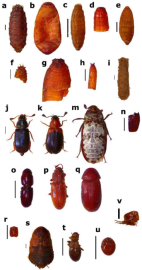
This experimental study explores entomological succession in mortuary contexts in caves, using the funeral practices of the indigenous populations of the Canary Islands as a model. A pig carcass was deposited in a cave shortly after its death and monitored for a year. The resulting entomological record closely matches the archaeoentomological data from Canarian burial caves. The experiment documented all stages of cadaveric succession and revealed insect species capable of adapting to the low light conditions of caves, including Calliphoridae. Other Diptera families were recovered: Piophilidae, Muscidae, Phoridae, Fanniidae, Sarcophagidae and Drosopholidae. Coleoptera evidences were also recorded: Nitulidae, Cleridae, Dermestidae, Histeridae, Tenebrionidae, Cryptophagidae, Ptinidae and Scarabaeidae. Other orders were documented: Hymenoptera (Formicidae), Lepidoptera (Pyralidae), Blattodea, Hemiptera and Siphonaptera. It is noteworthy that many of the insects identified match those found in archaeological contexts. A central contribution is the demonstration that Calliphoridae can complete their life cycle under near-total darkness, challenging a long-standing assumption in taphonomy and forensic entomology. The data also suggest the existence of consistent patterns of entomological activity in primary funerary contexts, and call into question the desiccation of the cadaver documented by other authors. This pioneering study of experimental funerary archaeoentomology provides a comparative framework for interpreting insect evidence in archaeological deposits in arid, enclosed or low-light environments such as natural caves, catacombs or hypogea.