
The last Neanderthals in Europe were descended from a single population
Knowledge of the population history of Neanderthals remains incomplete, including the evolutionary processes that preceded their extinction. This study provides evidence for a widespread genetic replacement in the demographic history of European Neanderthals. By integrating mtDNA and archaeological data, we reveal a geographic contraction followed by the expansion of Late Neanderthal populations, likely influenced by climatic fluctuations and resulting in a high genetic homogeneity before their disappearance. Specifically, our analyses suggest that Late Neanderthals across Europe largely derive from a major diversification event that took place ~65 ka in southwestern France. This was followed by a wider geographic spread, which is consistent with a postglacial population re-expansion across Europe.
Reference
Charoula M. Fotiadou, Jesper Borre Pedersen, Hélène Rougier, Mirjana Roksandic, Maria A. Spyrou, Kathrin Nägele, Ella Reiter, Hervé Bocherens, Andrew W. Kandel, Miriam N. Haidle, Timo P. Streicher, Nicholas J. Conard, Flora Schilt, Ricardo Miguel Godinho, Thorsten Uthmeier, Luc Doyon, Patrick Semal, Johannes Krause, Alvise Barbieri, Dušan Mihailović, Isabelle Crevecoeur, Cosimo Posth: Archaeogenetic insights into the demographic history of Late Neanderthals. PNAS, https://doi.org/10.1073/pnas.2520565123
©Institut Royal Belge des Sciences Naturelles
Communiqué de presse
Les derniers Néandertaliens d’Europe descendaient d’une seule population
Une nouvelle étude de la Senckenberg Nature Research Society et de l’Université de Tübingen, en collaboration avec le CNRS et l’Université de Bordeaux, révèle des bouleversements majeurs dans l’histoire génétique des Néandertaliens avant leur disparition.
Une étude intégrant de nouvelles données génétiques et archéologiques montre que les derniers Néandertaliens d’Europe ont connu un important renouvellement de population entraînant une faible diversité génétique avant leur disparition, il y a environ 40 000 ans. L’équipe internationale dirigée par le professeur Cosimo Posth du Senckenberg Center for Human Evolution and Palaeoenvironment de l’université de Tübingen retrace ainsi l’histoire génétique marquante des Néandertaliens d’Europe. Les chercheurs disposaient déjà de plusieurs indices suggérant que les premières populations néandertaliennes, autrefois largement répandues en Europe, avaient en grande partie disparu avant l’extinction de leurs derniers représentants. La nouvelle étude indique qu’un groupe ayant trouvé refuge dans l’actuel Sud-ouest de la France, une zone climatique favorable il y a environ 75 000 ans, aurait survécu aux conditions climatiques difficiles se mettant en place à cette période, et que les descendants de ces survivants se seraient ensuite dispersés à travers l’Europe après 65 000 ans. D’un point de vue génétique, presque tous les derniers Néandertaliens descendraient donc de cette seule lignée.
Posth et son équipe ont également constaté que ces derniers Néandertaliens ont par la suite subi un déclin démographique, il y a environ 45 000 ans. Cette diminution rapide de la population, atteignant un minimum vers 42 000 ans, s’est produite peu avant l’extinction complète des Néandertaliens. L’étude a été publiée dans la revue PNAS.
Sur le plan génétique, les Néandertaliens se distinguent clairement des populations d’Homo sapiens qui les ont remplacés il y a environ 40 000 ans. « Nous avons des indices que les Néandertaliens ont occupé l’Europe de manière continue entre 400 000 et 40 000 ans avant le présent. Cependant, nous ne disposions que d’informations fragmentaires sur leur histoire démographique », explique Posth. « Nous savons encore très peu de choses sur les évolutions qui ont précédé leur extinction. » Lui et son équipe se sont donc particulièrement intéressés aux dernières populations néandertaliennes vivant en Europe entre 60 000 et 40 000 ans.
Des données génétiques pour dix nouveaux individus
Dans leur étude, les chercheurs se sont focalisés sur les mitochondries présentes dans divers échantillons de dents et d’os de Néandertaliens mis au jour dans des grottes et abris sous roche. Ces organites cellulaires – de petites structures à l’intérieur des cellules – possèdent leur propre ADN, transmis indépendamment de l’ADN principal contenu dans le noyau cellulaire. « L’ADN mitochondrial ne contient pas autant d’informations génétiques que l’ensemble du génome humain, mais il se conserve généralement plus longtemps et est plus facile à analyser », explique Charoula Fotiadou, membre de l’équipe de Posth et première auteure de l’étude.
L’équipe a séquencé l’ADN mitochondrial de dix nouveaux individus néandertaliens provenant de six sites archéologiques localisés en Belgique, en France, en Allemagne et en Serbie. Ces données ont été analysées conjointement avec 49 autres échantillons déjà publiés. Les résultats ont ensuite été combinés avec des données sur la présence des Néandertaliens en Europe issues de la base de données archéologique à grande échelle ROAD, développée dans le cadre du projet ROCEEH (The Role of Culture in Early Expansions of Humans). « Cela nous a permis de combiner deux types de données afin de reconstituer l’histoire démographique des Néandertaliens dans l’espace et dans le temps », explique Jesper Borre Pedersen, co-auteur de l’étude et membre du projet ROCEEH.
Les derniers Néandertaliens issus d’une même lignée
L’étude démontre que les conditions climatiques rigoureuses de la période glaciaire, il y a environ 75 000 ans, ont fortement affecté les populations néandertaliennes d’Europe et réduit leur diversité génétique. Les chercheurs observent une diminution du nombre de sites archéologiques à cette époque, et leur concentration dans le Sud-ouest de l’Europe. « Nos données nous ont permis de mettre en évidence un repli des Néandertaliens vers l’actuel Sud-ouest de la France. Dans cette région, vers 65 000 ans avant le présent, le signal génétique d’une nouvelle population apparait avant de se diffuser à travers l’Europe », explique Posth.
« Cela explique pourquoi la presque totalité des derniers individus néandertaliens analysés jusqu’à présent, de la péninsule Ibérique au Caucase, appartient à la même lignée mitochondriale. » Ces résultats témoignent d’un bouleversement majeur dans l’histoire génétique des Néandertaliens européens.
Par ailleurs, les chercheurs ont utilisé un programme statistique pour déterminer si les variations de la diversité de l’ADN mitochondrial au fil du temps correspondaient à l’hypothèse d’une population de taille constante. Ce n’était pas le cas : les calculs suggèrent une diminution rapide et marquée du nombre de Néandertaliens entre 45 000 et 42 000 ans avant le présent. « D’un point de vue génétique, les derniers Néandertaliens formaient un groupe très homogène », conclut Posth. « Il est donc possible que cette faible diversité génétique ainsi que l’isolement ultérieur de petits groupes aient contribué à leur disparition. »
Une étude importante pour combler les lacunes en France
Depuis 2010, les avancées scientifiques permettant l’étude de l’ADN des populations néandertaliennes ont principalement été appliquées à des restes provenant de Belgique et de Sibérie. Or, une majorité des restes humains néandertaliens connus en Eurasie proviennent de sites français, mais l’ADN ancien y est rarement bien conservé. Cette nouvelle étude vient en partie combler ces lacunes : au total, quatre des dix nouveaux restes humains néandertaliens analysés proviennent de l’abri Tourtoirac (Dordogne) et de Saint-Césaire (Charente-Maritime).
« Les résultats obtenus à Tourtoirac et à Saint-Césaire, qui soulignent la diversité passée des lignées néandertaliennes, témoignent du riche potentiel offert par les restes mis au jour en France, en particulier dans les sites du sud-ouest du pays. Cette région, identifiée comme zone refuge il y a environ 75 000 ans, constitue un terrain clé pour mieux comprendre les dynamiques de peuplement néandertalien et répondre aux questions relatives à l’histoire démographique de ces populations préhistoriques », soulignent Isabelle Crevecoeur et Luc Doyon, chercheurs au CNRS et à l’université de Bordeaux.
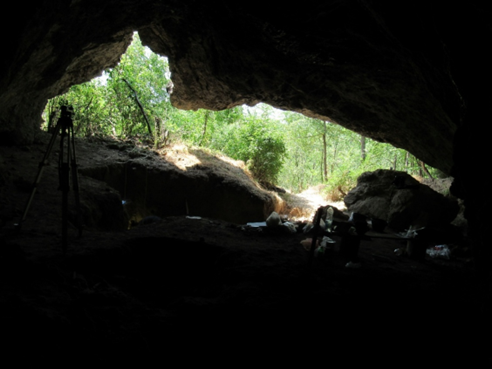
Porche de la grotte Pešturina en Serbie, d’où provient une dent néandertalienne analysée dans le cadre de l’étude. ©Dusan Mihailovic
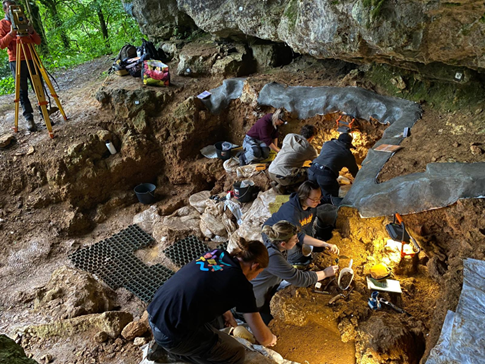
Fouilles à l’abri Tourtoirac en France où trois restes humains néandertaliens analysés dans le cadre de l’étude ont été mis au jour. ©Luc Doyon
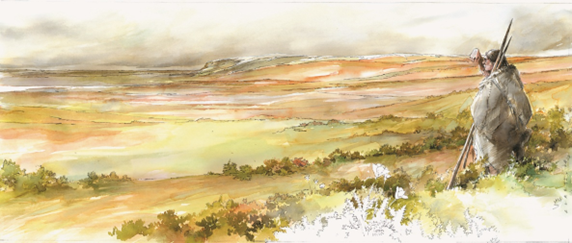
Reconstitution artistique du paysage occupé par les groupes néandertaliens au cours de la période glaciaire. ©Direction de l’archéologie du Pas-de-Calais / Benoît Clarys
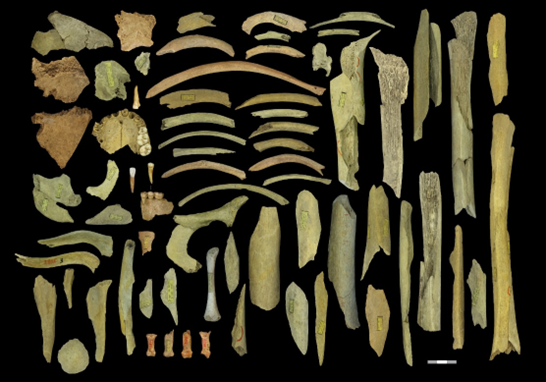
Collection de restes humains néandertaliens mis au jour à Goyet, en Belgique, dont trois analysés dans la présente étude. ©Institut Royal Belge des Sciences Naturelles
Remerciements
L’étude des collections conservées au Musée national de Préhistoire et la reprise des fouilles archéologiques à l’abri Tourtoirac depuis 2021 bénéficient d’un soutien financier du ministère de la Culture (DRAC Nouvelle-Aquitaine), du Conseil européen pour la recherche (ERC StG ExOsTech), de la Région Nouvelle-Aquitaine (THREADs), de l’Université de Bordeaux (GPR Human Past et UF Sciences et Technologies) et de la commune de Tourtoirac. La fouille programmée du site de Saint-Césaire et le PCR La Roche-à-Pierrot sont financés par ministère de la Culture, le département de Charente-Maritime et l’Université de Bordeaux (GPR Human Past).
Contacts
Dr. Isabelle Crevecoeur
Directrice de recherche CNRS
UMR 5199 PACEA, Université de Bordeaux,
Bâtiment B8, Allée Geoffroy Saint Hilaire, CS 50023
33615 Pessac Cedex, France
Phone +33 5 40 00 33 42
isabelle.crevecoeur@cnrs.fr
Dr. Luc Doyon
Chercheur en archéologie
UMR 5199 PACEA, Université de Bordeaux,
Bâtiment B8, Allée Geoffroy Saint Hilaire, CS 50023
33615 Pessac Cedex, France
luc.doyon@u-bordeaux.fr
Professor Dr. Cosimo Posth
University of Tübingen
Archaeo- and Palaeogenetics, Institute for Archaeological Sciences
Senckenberg Centre for Human Evolution and Palaeoenvironment
Phone +49 7071 29-74089
cosimo.posth[at]uni-tuebingen.de